High in the San Bernardino Mountains, where alpine forests surround the lake communities of Big Bear, art sometimes appears in unexpected places. One of those places is a pediatric room inside the Bear Valley Community Hospital District, where children facing illness now encounter a vibrant rainforest instead of sterile gray walls.
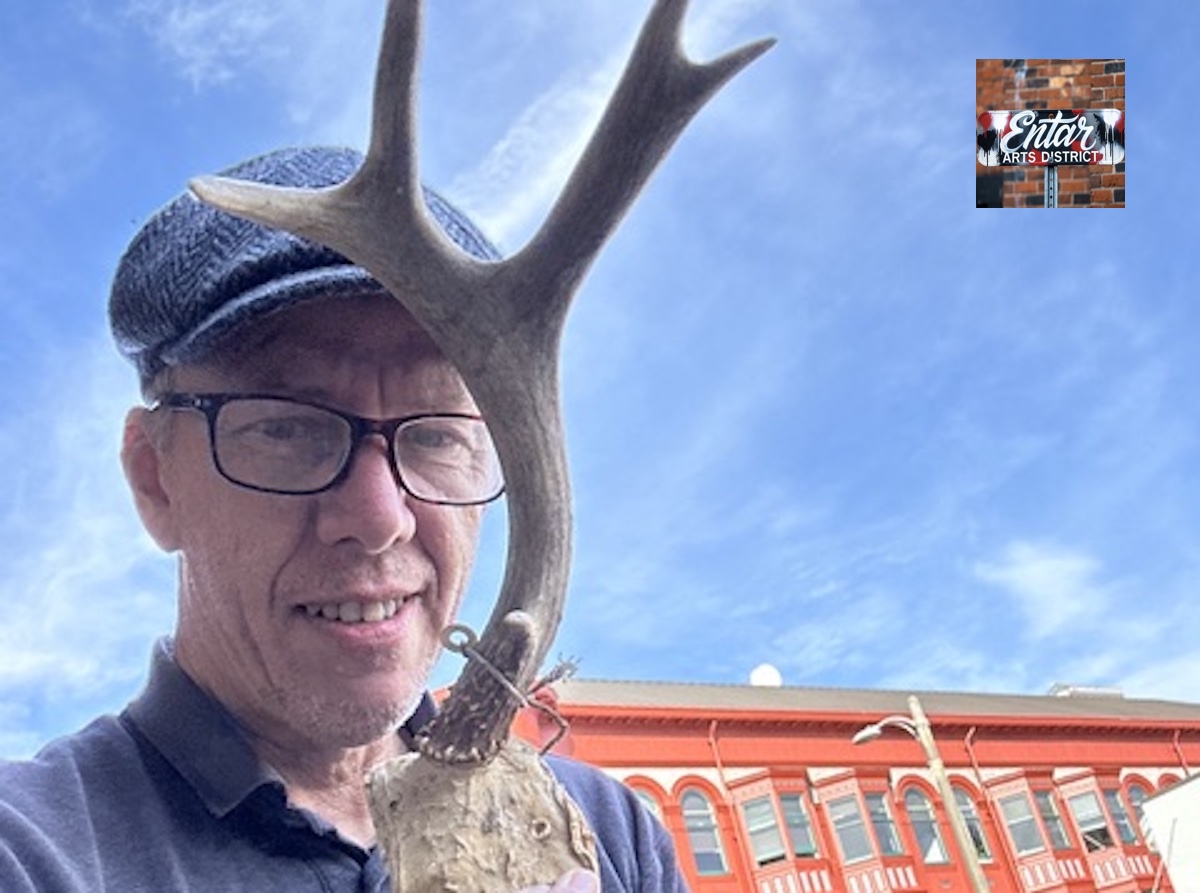
Behind that transformation is Big Bear–based muralist Edmund Ortega, an artist whose work blends community collaboration, cultural heritage, and a deep belief that art can play a role in healing.
This article explores the story behind Ortega’s mural work, focusing particularly on his recent pediatric mural project—an effort that turned a stark hospital environment into a space of comfort, imagination, and unity for children undergoing medical care.
A Mountain Artist with a Community Focus
Edmund Ortega is a muralist and freelance artist based in Big Bear City, California, where he operates an independent studio and produces both public and private art projects.
Like many muralists working within the tradition of community art, Ortega’s work extends beyond painting walls. His approach emphasizes collaboration—drawing ideas from local residents, educators, and institutions so the final piece reflects the community itself.
Murals have long played a vital role in California’s cultural landscape. Artists in the Chicano mural tradition and other public-art movements have used walls as storytelling canvases, documenting community identity, cultural heritage, and shared experiences. Ortega’s work follows in that lineage, emphasizing human connection and narrative meaning rather than purely decorative imagery.
In Big Bear, that philosophy recently found a powerful expression in a hospital pediatric room where young patients often confront fear, pain, and uncertainty.
The Challenge: A Stark Pediatric Environment
Hospital rooms are rarely designed with emotional experience in mind—particularly older facilities where the emphasis historically focused on clinical efficiency rather than psychological comfort.
At the pediatric room inside the Bear Valley Community Hospital District, the walls were largely bare and gray, reinforcing the seriousness of the medical environment. For children arriving in pain or distress, the stark atmosphere could intensify feelings of anxiety.
Medical professionals have increasingly recognized that the physical environment can influence patient wellbeing. Studies in healthcare design show that calming imagery, nature scenes, and playful visuals can reduce stress and support emotional recovery in young patients.
Hospital staff saw an opportunity to improve the room’s environment—and they turned to a local artist who understood the importance of community storytelling.
The Collaborative Vision
Rather than imposing a concept from the outside, Ortega approached the project as a collaborative design process.
He consulted closely with the hospital’s nursing staff and medical team, who understood firsthand what young patients experience when they enter the pediatric room. Their insights shaped the mural’s narrative and tone.
Together they explored several possible themes before narrowing the concept to one central idea:
A rainforest ecosystem filled with animals living in harmony.
The rainforest theme offered several advantages:
- Bright colors that counteract the sterile hospital setting
- Friendly animals that children can recognize and connect with
- Natural imagery known to evoke calm and curiosity
- A metaphor for unity and resilience in the face of hardship
By grounding the artwork in a natural environment, the mural could transform the room from a place defined by illness into a space of exploration and imagination.
Rainforest Animals as Symbols of Unity
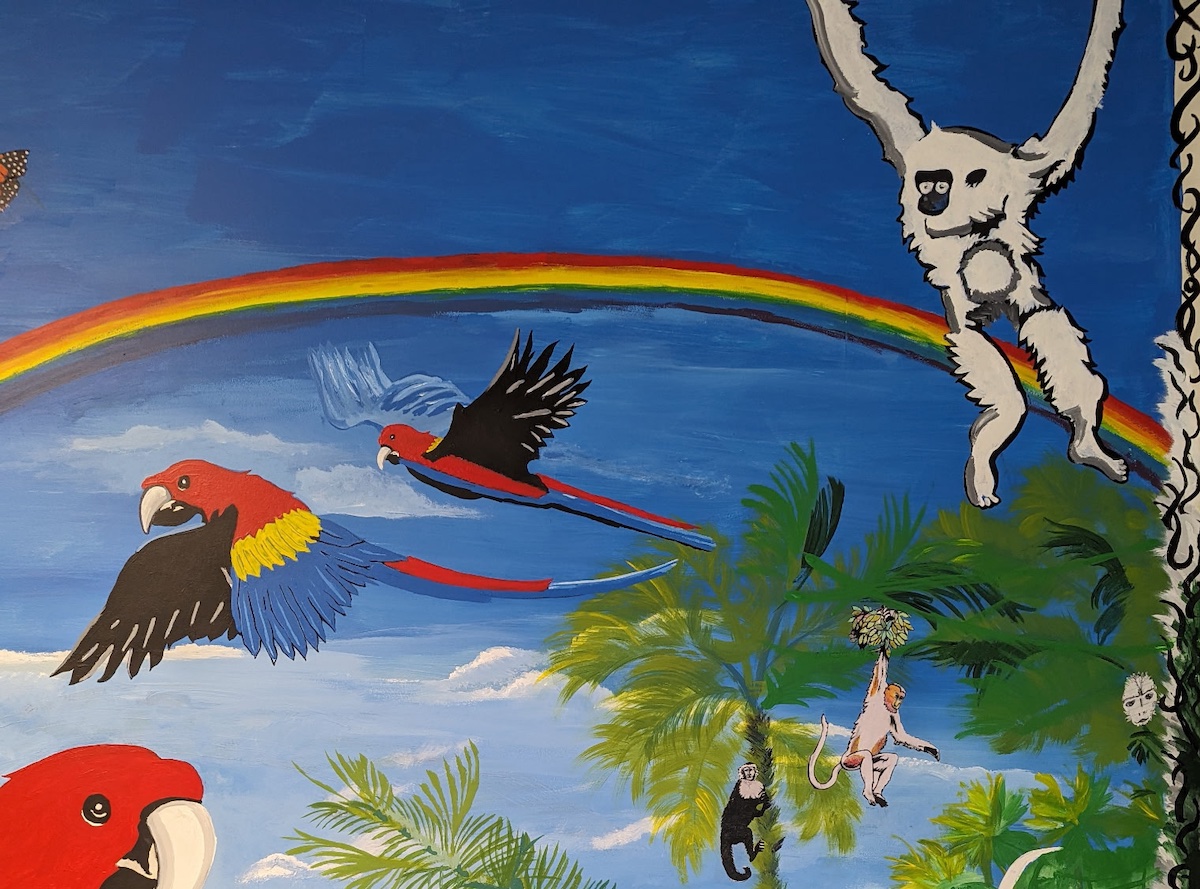
The final mural design depicts rainforest animals arranged in paired groupings—often in 2×2 and 3×3 clusters—to emphasize cooperation and companionship.
Rather than isolating individual animals, the composition focuses on relationships between creatures. Monkeys perch together on branches, birds appear in pairs, and jungle animals share the same vibrant habitat.
This structure subtly communicates a deeper message:
Healing rarely happens alone.
Just as rainforest species coexist in complex ecosystems, children navigating illness rely on a network of caregivers, doctors, nurses, and family members. The mural visually echoes that reality—showing that strength comes from connection.
For children facing medical procedures or pain, the artwork offers a reassuring story:
They are not alone in the struggle.
From Gray Walls to Living Jungle
Transforming the pediatric room into a rainforest environment required careful planning and sustained effort.
Ortega devoted approximately 20–40 hours of work to complete the mural, bringing color, movement, and layered imagery to the previously empty walls. The project operated on a modest budget—reflecting both the community nature of the effort and the artist’s commitment to supporting the hospital.
The process involved several steps:
- Concept development with hospital staff
- Sketching and layout planning for the animal compositions
- Surface preparation of the walls
- Painting layered backgrounds to create the rainforest setting
- Adding animal figures and details
- Final color adjustments and protective finishes
As the mural evolved, the room gradually shifted from sterile to immersive—transforming into a miniature jungle landscape where animals appear to inhabit the space alongside young patients.
Cultural Collaboration: Japanese American Influence
The mural project also included collaboration with a Japanese American muralist, reflecting the cross-cultural nature of contemporary community art.
Japanese American artists have played a significant role in the history of American muralism, contributing distinctive visual approaches shaped by both traditional Asian aesthetics and modern American public-art movements.
The collaboration enriched the mural process in several ways:
- Shared technical approaches to large-scale wall painting
- Dialogue about symbolism and storytelling in public art
- Cross-cultural artistic exchange within the community
Such partnerships highlight an important dimension of mural art: it is rarely the work of a single individual. Instead, murals often emerge from networks of artists, volunteers, and local collaborators, all contributing their perspectives to a shared visual narrative.
Art as Medicine
Although murals cannot replace medical treatment, they can influence emotional states in ways that support healing.
For children entering the pediatric room, the rainforest mural offers several psychological benefits:
Distraction
Young patients may focus on animals and colors instead of the anxiety associated with medical procedures.
Comfort
Warm colors and playful imagery soften the clinical atmosphere.
Curiosity
Children often search for specific animals in the mural, turning the artwork into a kind of visual game.
Empowerment
Friendly animal companions help children feel less isolated in unfamiliar surroundings.
Healthcare environments around the world increasingly incorporate art for exactly these reasons. Ortega’s mural demonstrates how a small, locally driven project can achieve the same therapeutic effect as large institutional art programs.

The Quiet Power of Local Artists
Unlike high-profile public murals that dominate city skylines, many of Ortega’s contributions happen in quieter spaces—schools, community rooms, and institutional settings where art can directly touch everyday lives.
Local artists often operate outside major galleries or museums, yet their work may impact communities more immediately and personally.
In this sense, Ortega’s pediatric mural reflects the true spirit of community muralism:
- Art created with the community rather than merely for it
- Projects focused on social benefit rather than commercial value
- Creative work that transforms everyday spaces
Such murals become part of the emotional landscape of a place, shaping how residents and visitors experience their environment.
A Room That Tells a Different Story
Today, children entering the pediatric room at Bear Valley Community Hospital encounter something very different from the gray walls that once defined the space.
Instead of a clinical void, they see:
- Tropical leaves
- Brightly colored animals
- Groups of creatures sharing the same habitat
- A visual reminder that life, even in difficult moments, contains color and companionship
The mural reframes the room’s narrative.
What was once a place associated with fear and discomfort now tells a story of resilience, community, and hope.
The Larger Meaning of Ortega’s Work
The story of Edmund Ortega’s mural is not just about art on a hospital wall.
It reflects a broader truth about public art:
Murals can change how people experience spaces that shape their lives.
For children facing medical challenges, that change can be profound. A simple image—a pair of monkeys, a bright parrot, a playful jungle scene—may offer a moment of calm in an otherwise stressful day.
Through collaborative effort, modest funding, and many hours of painting, Ortega helped transform a medical room into something more human.
And sometimes, in places where people need comfort most, a painted wall can become a small but meaningful form of healing.

Copyright © This free information provided courtesy Entar.com with information provided by Corey Chambers, Broker DRE 01889449. We are not associated with the seller, homeowner’s association or developer. For more information, contact 213-880-9910 or visit WeSellCal.com Licensed in California. All information provided is deemed reliable but is not guaranteed and should be independently verified. Text and photos created or modified by artificial intelligence. Properties subject to prior sale or rental. This is not a solicitation if buyer or seller is already under contract with another broker.