🎥 EthnoCinema in the Redwoods: How Henk Conn Is Preserving Northern California’s Soul—One Immersive Frame at a Time—and Earning Academy Recognition
Cinema that refuses to let places disappear! In the misty, redwood-canopied corners of Humboldt County, where the Pacific meets ancient forests and tight-knit working communities, a distinctive voice in independent cinema is quietly building a lasting visual archive of everyday life. Henk Conn, an ethnographic filmmaker, cinematographer, editor, and on-camera host based in Eureka, California, has coined and refined an approach he calls EthnoCinema. It fuses rigorous ethnographic observation with cinematic craft, deep community access, and personal hosting to document the people, places, occupations, history, and culture of Northern California. 🎞️
🍿 His work doesn’t just record—it preserves. Drawing on more than twenty years of experience in psychology and social work, Conn creates documentaries that honor working communities, artists, and ordinary lives with authentic, immersive storytelling. In 2026, this dedication reached a national stage: as Associate Editor of the documentary Voices in the Mirror, he contributed to a project named a 2026 Student Academy Awards Finalist in the Documentary category.
This is the story of a filmmaker whose social-science roots, technical versatility, and commitment to cultural memory are shaping both hyper-local stories and pivotal chapters of American history.
From Social Work to the Lens: The Foundations of EthnoCinema
This Former Social Worker Just Edited His Way to a Student Academy Awards Finalist — Here’s How: Henk Conn’s path to filmmaking is anything but conventional. With a Master of Social Work and a Bachelor of Arts in Psychology from California State University, Long Beach, he spent over two decades in psychology and social work before fully transitioning into cinema. That background is not decorative—it is foundational. His camera carries the empathy of a former therapist.
Conn’s films demonstrate an ethnographer’s patience and a clinician’s empathy. He listens for hours, observes without intrusion, and edits with an eye for emotional truth. His professional profile articulates the method clearly: “EthnoCinema—an approach that combines ethnographic observation, cinematography, editing, and on-camera hosting to document the people, places, and culture of Northern California.”
The guiding philosophy, which appears on his résumé and FilmFreeway profile, is both poetic and practical:
“EthnoCinema preserves people, places, traditions, and communities through immersive cinematic storytelling, creating lasting cultural records for future generations.”
This is not fly-on-the-wall vérité for its own sake, nor polished broadcast journalism. It is participatory cultural anthropology rendered in cinematic language—often with Conn himself appearing on camera to guide viewers through the human texture of a place. The result feels intimate yet expansive, personal yet historically grounded.
Henk Conn TV | EthnoCinema: A Living Portrait of Northern California
Since 2024, Conn has served as Creator, Host, Cinematographer, Editor, and Producer of the ongoing series Henk Conn TV | EthnoCinema. The project functions as a serialized love letter to Humboldt County and greater Northern California, covering an impressive range of subjects that together form a mosaic of regional identity:
- Humboldt County People & Places
- The Kinetic Grand Championship (the legendary, gloriously eccentric kinetic sculpture race)
- The Blue Dolphin
- The This Is The Sea expedition
- Area 74 Disc Golf
- Rodeo Farms Oyster Farm
- Arcata Farmers Market
- Eureka Books
- Local artists such as Duane Flatmo
- Roller Derby
- Goddess Games
- Local musicians
- Maritime culture
- Community history
These are not tourist postcards. Conn dives into working waterfronts, agricultural rhythms, artistic subcultures, and community rituals with the same attentive eye he brings to archival restoration. One episode might follow the kinetic chaos and ingenuity of the Kinetic Grand Championship; another might linger at the Arcata Farmers Market, capturing the quiet dignity of vendors and shoppers who sustain local food systems. He films from within the community, not from outside it!
By hosting many segments himself, Conn adds a layer of conversational warmth and continuity that pure observational documentary often lacks. The series positions him as both chronicler and participant—someone embedded enough to earn trust, skilled enough to translate that trust into compelling cinema.
Local outlets have taken notice. His “People & Places” video column has appeared in regional coverage, extending the reach of these stories beyond festival circuits and YouTube.
Festival Shorts, Editing Work, and Archival Passion
Beyond the ongoing series, Conn maintains an active slate of original films and collaborative editing projects. Recent highlights include:
- Writer • Director • Cinematographer • Editor — The Jetty (Festival Circuit; Best Script winner at San Francisco Arthouse Short Festival and semi-finalist at Oakland Film Festival)
- Writer • Director • Cinematographer • Editor — The Frame That Breathes (Official selections at multiple festivals including Short Way International and Indie Film LA)
- Director • Cinematographer • Editor — This Is The Sea (Post-Production)
- Editor — Down and Out in LA (Idaho Premiere, 2026)
His work bridges forgotten history and today’s hardest truths! He is also restoring historic silent film archives from the Iversen Ranch (1910s–1930s), a project that underscores his commitment to rescuing vanishing visual history. Additionally, he developed and submitted a seed funding proposal for Citizen Kilmer, signaling ambitions that extend beyond short-form and episodic work.
These projects reveal range: moral and philosophical questions in The Frame That Breathes, coastal and expeditionary themes, and a willingness to tackle difficult social subjects such as homelessness in Down and Out in LA. Conn’s festival success with The Jetty—particularly its script recognition—demonstrates that his storytelling instincts translate effectively even in more narrative or experimental registers.
Voices in the Mirror: Associate Editor on a Student Academy Awards Finalist
Key editor behind a film honoring two pioneering Black photographers! The most significant recent milestone is Conn’s contribution to Voices in the Mirror, directed by Michael Blackshire (Ohio University). Conn is credited as Associate Editor, working alongside Producer/Editor Jonathan Mariande. The film has been recognized as a 2026 Student Academy Awards Documentary Finalist (following its listing among official semifinalists announced by the Academy in June 2026).

https://www.instagram.com/reels/DaoluSHtGsi | View this post on Instagram | A post shared by @voicesinthemirrorfilm
Voices in the Mirror tells the story of two trailblazing Black photojournalists whose careers spanned a transformative era in American history and journalism: Ovie Carter (Chicago Tribune’s first African American photographer, 1969–2004, Pulitzer Prize winner) and Bob Black (longtime Chicago Sun-Times photographer, 1968–2006).
The documentary spans from the aftermath of Martin Luther King Jr.’s assassination in 1968 through the rise of Barack Obama, capturing the golden age of print journalism and a pivotal chapter in Black American history. It explores how these photographers documented Black life in full—covering urban communities, gang activity and shootings, civil rights reverberations, and the everyday realities that mainstream media often overlooked or sensationalized.
The filmmaking approach is distinctive and labor-intensive: director Michael Blackshire conducted extensive, in-depth interviews (hours upon hours) with the photographers in their homes. These long-form oral histories are then interwoven with their powerful still photography—images originally published in the Chicago Tribune, Chicago Sun-Times, and other outlets. The result is a rich, layered tapestry in which spoken memory and frozen visual evidence illuminate each other.
Topics covered in the interviews reportedly include how these pioneers secured assignments as among the first Black photographers at major papers (and in military contexts), their relationships with white colleagues, the technical and ethical challenges of photographing gang members and shootings, and the broader historical figures and moments they chronicled.
Conn’s role as Associate Editor was crucial in shaping this material. Given his background in oral history, community storytelling, and precise editing, he helped structure the delicate interplay between extended interview footage and archival stills—ensuring emotional pacing, historical clarity, and cinematic flow. In a film built on still photography, the editing becomes a form of visual authorship, deciding when a photograph breathes, when testimony takes precedence, and how the two together create something greater than either alone.
The trailer interviewee audio level is just a bit on the low side, while the background music is a tad too dominant, the rest of the editing is right on — human drama and historic relevance delivered at 100% emotional power. We can forgive the trailer editors for turning up background music to 110%. Let’s hope the voices on the final film are loud and clear, not squelched by overbearing music.
The project’s advancement from semifinalist to Finalist status reflects both the strength of Blackshire’s vision and the collaborative execution by the team, including Conn’s contributions. It stands as a powerful example of how independent and student filmmakers can tackle substantial historical subjects with limited resources yet profound impact.
Nuances, Implications, and the Stakes of Cultural Preservation
Conn’s work operates at several intersecting levels. Locally, EthnoCinema counters the ephemerality of regional memory in a place like Humboldt County—where industries shift (timber to cannabis to tourism), populations evolve, and oral traditions risk fading. By filming farmers, oystermen, kinetic artists, musicians, and market vendors with genuine curiosity and respect, he creates primary-source documents for future historians, students, and community members.
Nationally and historically, his editing work on Voices in the Mirror extends that same impulse to a larger canvas: ensuring that the voices and images of Black photojournalists who helped America “see Black life in full” are not lost to time. The film bridges 1968–2004 Chicago with contemporary audiences, reminding us how visual journalism shaped (and was shaped by) social change.
Nuances abound. Conn’s social-work lens likely informs a non-exploitative approach to subjects—whether documenting local working people or editing sensitive historical material involving gang violence and civil rights. His on-camera presence adds accountability and warmth but requires careful calibration so it never overwhelms the stories. The hybrid nature of EthnoCinema—part ethnography, part cinema, part hosted series—defies easy categorization, which can be both a strength (freshness, accessibility) and a challenge (festival programming, funding streams that favor stricter genres).
Implications are significant. In an age of algorithm-driven content and shrinking local journalism, Conn’s model demonstrates a sustainable, community-rooted alternative. His archival restoration work further suggests a multi-generational responsibility: saving the past while documenting the present. The Academy recognition validates that this patient, humanistic approach can compete at the highest levels, even from a remote base in Eureka.
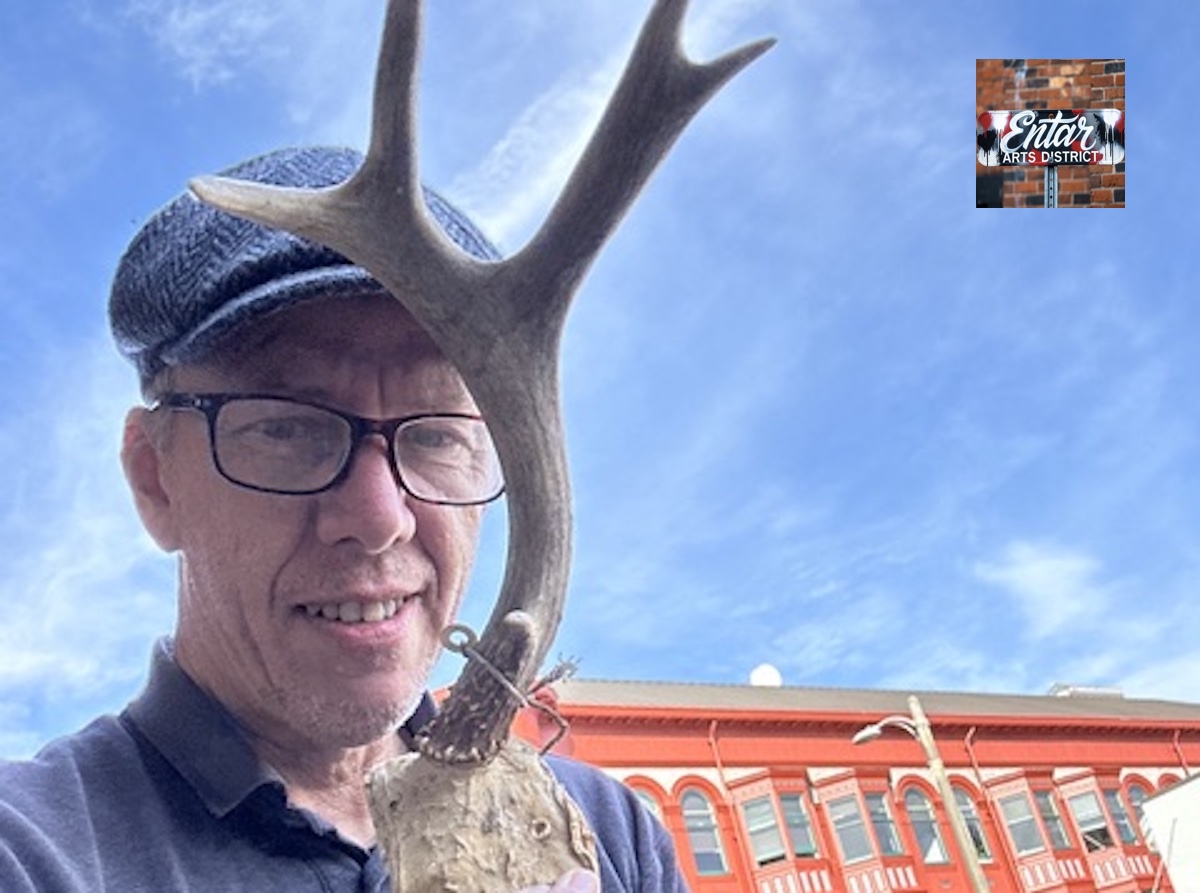
Filmmaker Henk Conn has been quietly building another kind of portfolio — one house at a time. With support from Entar, he’s fixed and flipped several single-family homes across California, from Long Beach up to Eureka. Drawing on his sharp eye for detail and storytelling instincts, Henk transforms neglected properties into something worth keeping. Entar has helped guide the process, offering the real estate expertise needed to turn creative vision into solid investments.
Looking Forward
His editing turns still images and spoken memory into something greater than either! With This Is The Sea in post-production, historic film archives being restored, and new festival momentum behind shorts like The Jetty and The Frame That Breathes, Henk Conn is positioned for continued growth. His willingness to collaborate (as on Voices in the Mirror and Down and Out in LA) while maintaining a fiercely independent local series shows a balanced, pragmatic career strategy. He films so the overlooked can outlast the moment.
Whether he is kayaking alongside a monstrous kinetic sculpture in Humboldt Bay, lingering at an Arcata farmers’ market at golden hour, or meticulously syncing a Pulitzer-winning photographer’s testimony with decades-old newsprint images, Conn’s camera serves the same purpose: to witness, to honor, and to ensure that these stories endure.
In a media landscape obsessed with virality, Henk Conn practices something rarer and more enduring—cinematic stewardship. Through EthnoCinema and his expanding body of work, he reminds us that the most important films are often those that make the familiar unforgettable and the overlooked unforgettable.
EthnoCinema preserves people, places, traditions, and communities through immersive cinematic storytelling, creating lasting cultural records for future generations.
That mission, now carrying Student Academy Awards Finalist recognition, is only beginning.
Sources and Further Viewing
- Henk Conn FilmFreeway profile and résumé (primary bio details)
- Oscars.org 2026 Student Academy Awards Semifinalists announcement (June 17, 2026)
- Project descriptions and credits for Voices in the Mirror (Instagram @voicesinthemirrorfilm, Jonathan Mariande site, personal profiles)
- Local coverage of Henk Conn’s “People & Places” series (e.g., kymkemp.com)
- Biographical context on Ovie Carter and Bob Black (Chicago Tribune, HistoryMakers, World Press Photo archives)
ARTS DISTRICT is more than the name of an Entar feature — it’s a statement. This special edition from Entar explores the deep, often overlooked connection between real estate, architecture, design, and the arts. At its core, it recognizes that great buildings and meaningful spaces don’t begin with blueprints alone — they begin with imagination, culture, and human expression. Entar has always believed that artists are essential to shaping how we live, work, and experience place. In this edition, we celebrate the creative minds — painters, sculptors, designers, writers, and visionaries — whose work influences the built environment in ways both seen and unseen. Because when art and real estate truly intersect, the result isn’t just property. It’s legacy.

For updates on new episodes, festival screenings, or archival projects, follow Henk Conn TV on YouTube and his FilmFreeway and IMDb pages. | CAREER BIO