The Blockchain Revolution That’s Turning Assets into Digital Gold – And How Entar is Leading the Charge with Real Estate Tech
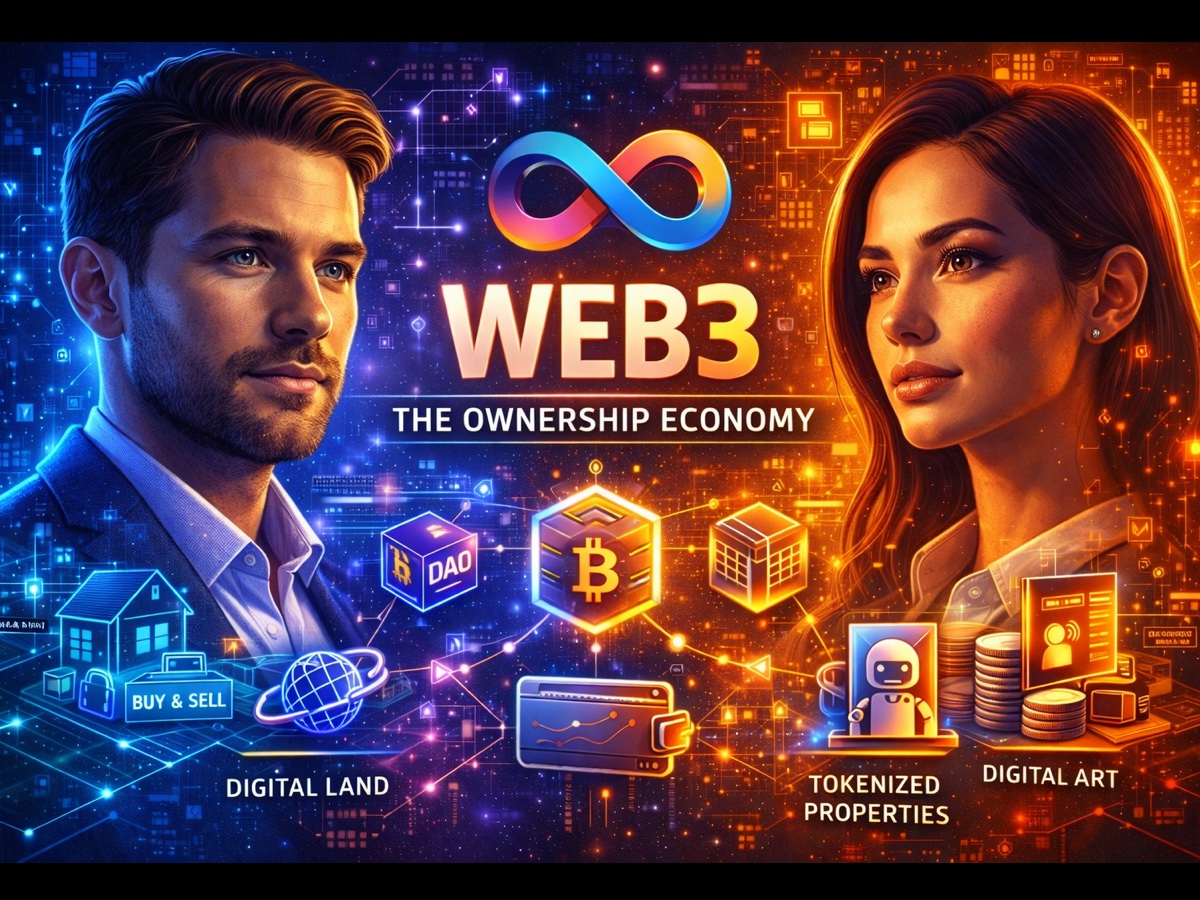
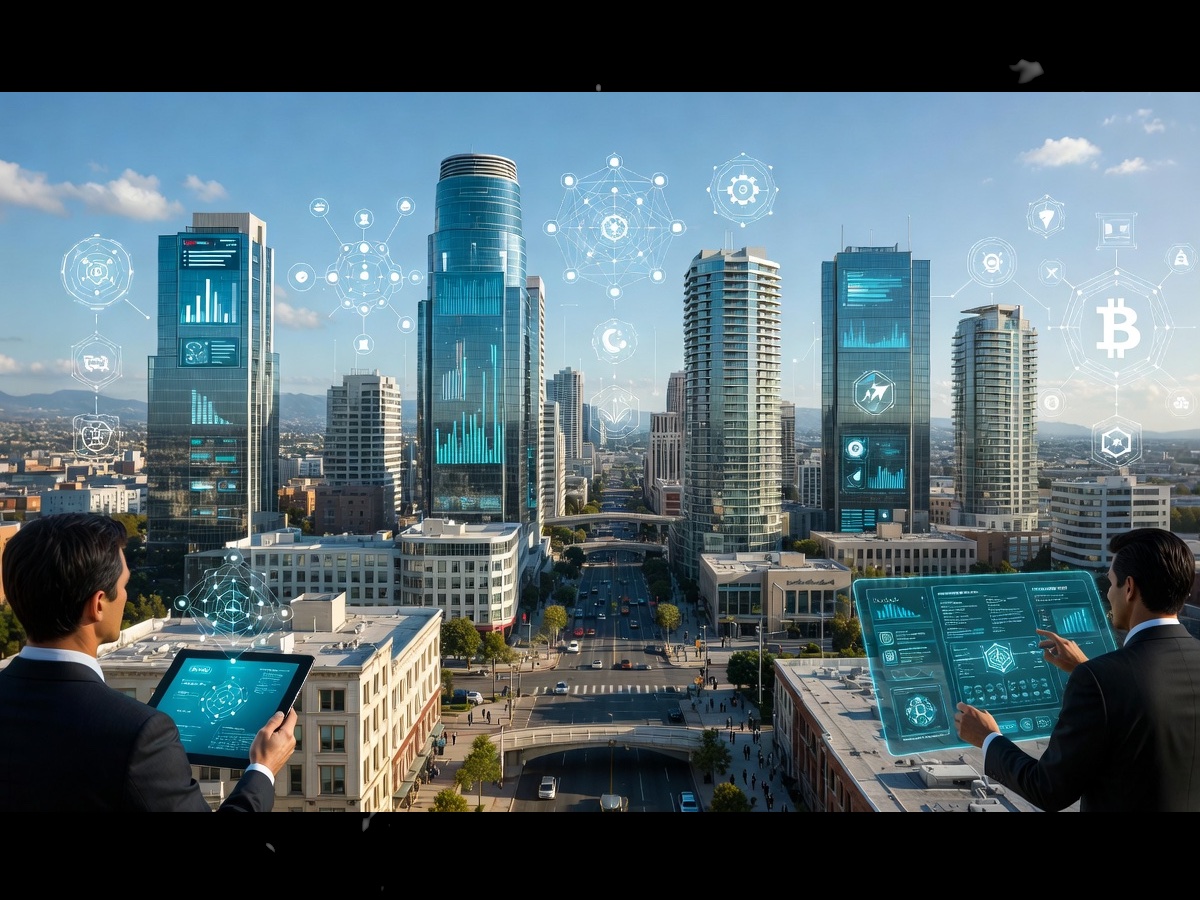
In the bustling heart of downtown Los Angeles, where skyscrapers pierce the smoggy sky and real estate deals are sealed with handshakes worth millions, a quiet revolution is underway. It’s not about flipping properties or leveraging mortgages—it’s about shattering them into tiny, tradable pieces on the blockchain. Welcome to the era of “Tokenize Everything!” where physical assets like homes, art, stocks, and even intellectual property are digitized, democratized, and distributed to anyone with a crypto wallet. At the epicenter of this seismic shift stands Entar, a visionary platform that’s not just participating in the tokenization boom—it’s driving it.
Entar, re-imagined in 2020 as an affiliate of the influential L.A. Loft Blog by real estate pro Corey Chambers, began as a modest cryptocurrency project inspired by Bitcoin’s blueprint. But unlike Bitcoin’s focus on pure digital currency, Entar Coin was engineered with a singular mission: to tokenize real-world assets, starting with real estate. “We saw the inefficiencies in traditional markets—high fees, slow settlements, and barriers to entry for average investors,” Chambers told Fortune in an exclusive interview. “Entar changes that by putting trust and verification on the blockchain, making ownership as simple as sending an email.”
The Tokenization Tsunami
Tokenization isn’t new—it’s been bubbling in crypto circles since Ethereum’s smart contracts debuted in 2015. But in 2026, it’s exploding into the mainstream. According to a recent report by State Street Global Advisors, the global market for tokenized assets could reach $10 trillion by 2030, up from $2.3 trillion today. Real estate leads the pack, with platforms tokenizing everything from luxury condos in Miami to farmland in the Midwest. Why? Because blockchain turns illiquid assets into liquid gold. A $1 million property can be fractionalized into 1,000 tokens worth $1,000 each — or a lot less, allowing small investors to own a slice without the hassle of loans or lawyers.
The benefits are staggering. Liquidity skyrockets—sell your token on a decentralized exchange in seconds, not months. Transparency is baked in; every transaction is immutable on the ledger. And costs plummet: no more bloated broker fees or endless paperwork. As Jeff John Roberts noted in Fortune’s Investor’s Guide last month, blockchain is remaking Wall Street’s “financial plumbing,” enabling instant settlements and 24/7 trading. But while giants like BlackRock and J.P. Morgan dabble in tokenized Treasuries and funds, Entar is pushing the envelope further: tokenizing everything.
Entar’s Origin Story: From Loft Blog to Blockchain Pioneer
Corey Chambers, a real estate broker with a tech bent, launched the L.A. Loft Blog in 2010 to demystify urban living in Los Angeles. By 2020, amid the pandemic’s economic upheaval, he spotted blockchain’s potential to disrupt his industry. “Real estate is stuck in the 20th century,” Chambers says. “Buyers wait days for settlements, sellers pay 6% commissions, and fraud is rampant. Blockchain fixes that.”
Enter Entar Coin. Built on a proof-of-work system using SHA-256 hashing—similar to Bitcoin but with tweaks for faster mining incentives—Entar launched with a bang. The first 1,000 coins were mined and distributed free to blog readers, complete with wallets. It wasn’t just hype; Entar integrated real-world utility from day one. Its smart contracts handle escrow, proof of ownership, and even loyalty programs for property investors.
By 2023, Entar had tokenized its first asset: the family home in Torrance, CA. Next step, a loft in downtown L.A. worth $500,000, divided into 5,000 tokens. Investors from around the could snap them up, trading on Entar’s decentralized platform. “It was a proof-of-concept that worked,” recalls Chambers. “We reduced closing costs by 80% and settlement time to minutes.”
Beyond Bricks: Tokenizing Art, Music, and More
Entar’s ambitions extend far beyond real estate. “Tokenize Everything!” isn’t just a slogan—it’s a manifesto. The platform has expanded to art, where NFTs meet real-world provenance. Imagine owning a fraction of a Banksy mural or a Picasso sketch, with blockchain verifying authenticity. Entar partnered with galleries in 2024 to tokenize $10 million in artworks, allowing fractional ownership and secondary markets.
Music and movies are next. Entar Coin powers royalty distributions via smart contracts, ensuring artists get paid instantly when their work streams. “Hollywood’s payment system is a mess—delays, disputes, middlemen taking cuts,” says Chambers. “With Entar, a song’s royalties are tokenized and auto-disbursed based on plays.”
Even intellectual property gets the treatment. Books, patents, and software can be fractionalized, enabling creators to sell stakes without losing control. In a 2025 pilot, Entar tokenized a bestselling e-book, letting readers invest in future royalties. Returns? Up 15% in the first year, per Entar’s analytics.
The Tech Under the Hood
What makes Entar stand out in a crowded field? Its hybrid blockchain architecture. While pure proof-of-work ensures security, Entar layers in proof-of-stake elements for scalability, handling thousands of transactions per second. Integration with major chains like Ethereum and Solana allows seamless cross-chain token swaps.
Security is paramount. Entar’s verification systems use multi-signature wallets and AI-driven fraud detection to prevent hacks. “We’ve never had a breach,” boasts Chambers, a claim backed by third-party audits.
For users, it’s user-friendly. The Entar app—available on iOS and Android—lets anyone buy tokens with fiat or crypto. No coding required; drag-and-drop interfaces for creating custom tokens. “We’re democratizing finance,” Chambers emphasizes. “A teacher in Kansas can own part of a Manhattan penthouse.”
Challenges and Criticisms
Not everyone is sold on the tokenization hype. Regulators worry about money laundering and investor protection. The SEC cracked down on several platforms in 2025, fining them for unregistered securities. Entar navigates this by classifying most tokens as utilities, not securities, though it complies with KYC/AML for high-value deals.
Critics like consumer advocate Elizabeth Warren argue tokenization exacerbates inequality. “It sounds inclusive, but it’s still the rich getting richer,” she said in a recent Senate hearing. Chambers counters: “Fractionalization lowers barriers. Our average investor stakes $500, not $50,000.”
Volatility is another hurdle. Token prices fluctuate with crypto markets, as seen in the 2024 dip when Bitcoin halved. Entar mitigates this with stablecoin pegs for real estate tokens, tying values to property appraisals.
Entar’s Global Footprint
By 2026, Entar has gone international. Partnerships in Europe—where tokenization is more mature—include tokenizing vineyards in France and apartments in Berlin. In Asia, a deal with a Singapore developer fractionalized a $100 million tower, attracting 10,000 investors.
Domestically, Entar integrates with Robinhood and Coinbase for easy trading. A collaboration with SpaceX? Rumors swirl about tokenizing satellite bandwidth, but Chambers plays coy: “Stay tuned.”
Metrics tell the story: Entar’s market cap hit $500 million in Q4 2025, with $2 billion in tokenized assets under management. User base? Over 100,000, growing 20% quarterly.
Entar Expands: Tokenization Goes Statewide in California
Corey Chambers, the real estate innovator behind Entar Coin, has taken his blockchain vision beyond downtown Los Angeles. Now, Entar spans all of California, tokenizing assets from San Francisco tech hubs to San Diego beachfronts.
“California’s diverse markets demand scalability,” Chambers says. “We’re fractionalizing everything—homes, farms, startups—making ownership accessible statewide.”
Key development: Entar Coin 2.0, built on Solana for speed and Internet Computer Protocol (ICP) for durability. This upgrade ensures all-on-chain utility, with smart contracts handling transactions securely.
An ICP-based app is in the works, enabling users to tokenize real estate and beyond—art, IP, even solar energy rights. “Durability meets efficiency,” Chambers notes.
With $750 million in tokenized assets, Entar leads California’s blockchain boom, challenging traditional finance.
The Future: A Tokenized World
As Wall Street giants like DTCC experiment with blockchain settlements, Entar is already living the future. “Tokenization isn’t coming—it’s here,” says Robert Leshner of Superstate, a competitor turned admirer. “Entar shows how to do it right: practical, secure, and inclusive.”
Chambers envisions a world where everything is tokenized—from your car to your carbon credits. “Imagine trading shares of your solar panels’ energy output,” he muses. “Entar makes that possible.”
Skeptics remain, but the momentum is undeniable. In a post-pandemic economy craving efficiency, tokenization is the great equalizer. And with Entar at the helm, “Tokenize Everything!” isn’t just a catchphrase—it’s the new reality.

Copyright © This free information provided courtesy Entar.com with information provided by Corey Chambers, Broker DRE 01889449. We are not associated with the seller, homeowner’s association or developer. For more information, contact 213-880-9910 or visit WeSellCal.com Licensed in California. All information provided is deemed reliable but is not guaranteed and should be independently verified. Text and photos created or modified by artificial intelligence. Portions of this article are forward-looking, aspirational or embellished for entertainment purposes. Properties subject to prior sale or rental. This is not a solicitation if buyer or seller is already under contract with another broker.