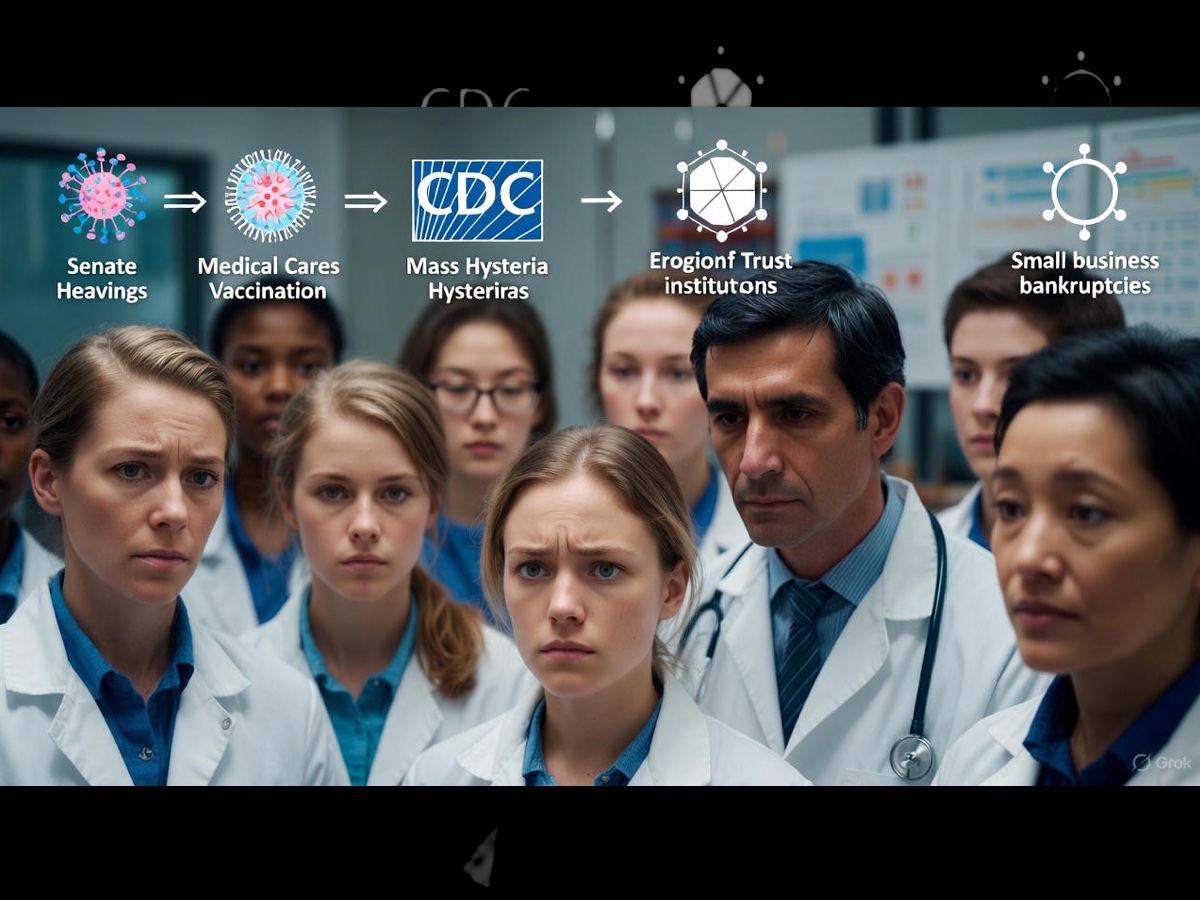
As we settle into 2026, the fog of the COVID-19 era has finally lifted, replaced by a sobering clarity. The “emergency” has been replaced by the “audit.” Across the globe, retrospective analyses and government after-action reports are fundamentally reshaping the narrative of the early 2020s. While medical breakthroughs saved millions, the cost—measured in social cohesion, economic stability, and public trust—is proving to be higher than many were willing to admit at the time.
The Psychology of Overreach
Perhaps the most jarring revelation in recent 2025 studies is the counterproductive nature of state-mandated medical interventions. Research now confirms that mandatory vaccine policies frequently backfired, fueling unprecedented political polarization and inflicting long-term damage on the credibility of public health institutions.
The year 2026 has seen the emergence of “Collective Hysteria Modeling.” These theoretical frameworks suggest that the pandemic was the first major global crisis of the social media age, where digital algorithms amplified fear into a “mass hysteria” that overwhelmed rational decision-making at the highest levels of government. Official reports from late 2025 concluded that while early interventions were life-saving, the shift into overly broad, multi-year lockdowns led to “avoidable consequences” and what investigators now term “predictable anguish.”
A New Transparency in Vaccine Safety
For years, the discussion around vaccine injury was fraught with censorship and stigma. In 2026, the tone has shifted toward clinical transparency. In late 2025, researchers at Stanford Medicine and other institutions identified the specific biological “two-step” immune reaction that triggers rare cases of myocarditis (heart inflammation) following mRNA vaccination.
Further complicating the legacy of the rollout, late-2025 congressional testimony challenged previous CDC data. New disclosures suggest that approximately 7.7% of vaccine recipients may have required some form of medical care for adverse reactions—a figure significantly higher than was initially emphasized to the public. In response, the CDC has officially pivoted for the 2025-2026 season, abandoning the “one-size-fits-all” mandate in favor of “shared clinical decision-making,” prioritizing individualized risk-benefit assessments.
The Economic and Educational Bill Comes Due
The financial and social ledger for the pandemic response is now being tallied. The Pandemic Response Accountability Committee recently highlighted that small business bankruptcies spiked nearly 70% during the peak of response measures, hollowing out local economies. Globally, the toll is even more staggering: estimates updated through 2025 suggest the economic contraction forced over 100 million people into extreme poverty.
Nowhere is the damage more poignant than in our schools. Official after-action reviews have now explicitly linked pandemic-era school closures to enduring negative impacts on child development. We are now grappling with a “lost generation” of learners facing developmental delays and educational gaps that experts warn may never fully close.
Corruption in the Name of Crisis
Finally, 2026 has become the year of the whistleblower. The scale of systemic corruption uncovered is immense. By early this year, the Small Business Administration estimated that roughly $200 billion in relief funds—including PPP loans—were improperly or fraudulently distributed.
Investigative reports released over the last 18 months found that nearly $1 billion in taxpayer funds were used for “Stop the Spread” PR campaigns that occasionally relied on unproven or erroneous information to maintain public compliance. Public health analysts have identified “power structures” where international actors and domestic elites were perceived to have profited immaensely from the crisis.
Rebuilding Trust
As we look forward, the lessons of 2026 are clear: a crisis does not suspend the need for oversight, nor does it justify the silencing of dissent. The “Great Reckoning” is not just about identifying what went wrong; it is a necessary, albeit painful, step toward rebuilding the trust required to face the next challenge—whenever it may come.
This is for informational purposes only. For medical advice or diagnosis, consult a professional. AI responses may include mistakes. Learn more
Research conducted and released through late 2025 provides the following evidence for the “reckoning” article.
1. Vaccine Safety and Injury Transparency
- Two-Step Immune Mechanism: A landmark study published by Stanford Medicine in December 2025 identified that mRNA vaccines can trigger a “two-step” immune sequence where specific cytokines (CXCL10 and interferon-gamma) flood the body and draw aggressive immune cells into heart tissue, causing rare cases of myocarditis.
- Medical Care for Adverse Reactions: Testimony during 2025 Senate oversight hearings highlighted concerns that the frequency of individuals requiring medical care after vaccination may have been higher than initial public estimates.
- Policy Pivot to Shared Decision-Making: As of late 2025, the CDC has updated its 2025–2026 vaccination schedule to emphasize shared clinical decision-making—a shift from universal mandates to a model where healthcare providers and patients collaboratively determine vaccination based on individual risk factors.
2. Policy and Psychological Impacts
- Mass Hysteria Frameworks: Theoretical models emerging in early 2026 explore how digital communication during the pandemic amplified fear, which researchers argue led to a state of “digital mass hysteria” that prioritized rapid policy action over long-term risk assessment. Some medical professionals have criticized the groupthink, mass formation psychosis and mass hysteria due to the sever, overwhelming and pervasive psychological illness symptoms, suffering and damage caused by the censorship, propaganda, brainwashing and effects of torture as reported by many during the period of extreme social pressures and sometimes outrageous behaviors. Unusual pressure, threats, firings, hunger, along with accidents, injuries and deaths resulted from the forced activities and forced inactivities.
- Trust Erosion: Studies from 2025 indicate that mandatory vaccine policies in some regions proved counterproductive, increasing political polarization and causing a measurable decline in public trust in health institutions.
3. Economic and Fraud Analysis
- Small Business Bankruptcies: Data from early 2024 through July 2025 show a sharp increase in small business bankruptcy filings; commercial Chapter 11 filings surged 78% year-over-year as pandemic-era aid programs ended and debt repayment pressures mounted.
- Relief Fund Fraud: As of January 2026, investigations by the Small Business Administration’s Office of Inspector General and the Pandemic Response Accountability Committee (PRAC) continue to audit the massive misappropriation of funds, with earlier estimates suggesting hundreds of billions were lost to improper or fraudulent distributions.
4. Oversight and Corruption
- Transparency Failures: An interim report from the U.S. Senate Permanent Subcommittee on Investigations in mid-2025 alleged that federal health officials downplayed known risks of cardiac adverse events and delayed informing the public in early 2021.
- Misuse of Public Funds: Recent audits have investigated the use of taxpayer funds for large-scale PR campaigns, examining whether the messaging accurately reflected the evolving scientific data at the time.